Showing posts with label Bauhaus. Show all posts

Monday, April 25, 2011

Gloria Mundi – I, Individual (RCA, 1978)


Another tragic loss to the ravages of time, Mick Mercer once referred to these kids as “lost Goth giants”, thereby contradicting his own earlier statement that the rise of Goth “can truthfully be traced only as far back as the rise of Bauhaus” (Mercer, The Gothic Rock Black Book, Omnibus Press, 1988).

Gloria Mundi started coming to public attention supporting early John Foxx-era Ultravox! Indeed, saxophonist C.C. actually worked as a session musician on the track “Hiroshima Mon Amour” on the second Ultravox! album Ha!-Ha!-Ha! (Island Records, 1977), and bassist Ice had previously played in an outfit known as Yours with early Ultravox! guitarist Stevie Shears.

Highly theatrical in their live performances, Gloria Mundi stood apart from the majority of their post-punk peers in being driven more by a sense of gloom than by any more nihilistic tendencies, a noose reportedly gracing their stage on regular occasions.


First materializing on vinyl with the Fight Back! single (RCA, 1978), the astonishing musical document that is I, Individual was their first full length release. Complex and diverse, the album ranges from the outright punk of “Split Personality” through to longer labyrinthine arrangements that suggest the band may have been more than passing fans of Eno-era Roxy Music. A strong flavour of performance art remains throughout, providing a thread that would later be picked up by early Dark Cabaret artists, most noticeably Sex Gang Children.


I-Individual


The Pack


Split Personality


Perhaps too far left of field for their time to gain widespread acceptance, the true legacy of Gloria Mundi remains as being the nurturing uncles of the then nascent Bauhaus, inspiring the latter as their support band to adopt a more refined image that would become the template of the ten million Goth acts that would follow in their wake.

Several more singles and a second album, The Word is Out (RCA, 1979) would follow, before Gloria Mundi would dissolve, leaving Eddie and Sunshine to continue as the imaginatively named Eddie and Sunshine who released several singles and at least one LP, Perfect Strangers in 1983, described as “synth-pop” through Survival Records. Sunshine continues to work under the name Sunshine Gray.


I think we should let Mick Mercer have the final word here, writing in the introduction to his self published (?) photo book of Gloria Mundi : “Indisputably the first Goth band”.
And brilliant they were.


Line Up: Eddie Mealoy (vocals), Sunshine Patteson (vocals, keyboards), C.C. (saxophone), Ice-AKA Roland Oxland (Bass), Beethoven – AKA Pete Vas (guitar), Mike Nicholls (drums)
The line-up of Gloria Mundi seems a little dubious. While everyone agrees on Eddie and Sunshine as core members, there is little consensus on anyone else. Who was actually in the band and who were hired guns along for the ride seems to depend largely on who you read.


This is the rear cover  for I, Individual, but the 
track order (at least on the version I own) is completely wrong. 

Wednesday, January 12, 2011

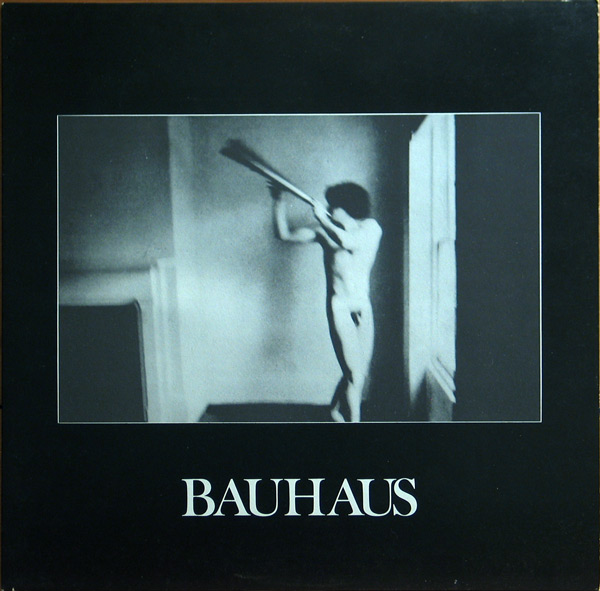
Bauhaus – In The Flat Field (4AD-1980)


Seriously, what do you want me to say?
The mere idea of trying to objectively review this one actually terrifies me beyond belief.

As with any scene, there is justifiable argument about where Goth started; Siouxsie, Joy Division, Gloria Mundi, Killing Joke, UK Decay and others all laid the groundwork, but it was Bauhaus with the deliberately toungue-in-cheek Bela Lugosi’s Dead (Small Wonder Records, 1979) that unintentionally both defined and refined a genre.

Although three-quarters of Bauhaus had known each other through various bands kicking around Northampton previously, the band coalesced when Pete Murphy was asked to join as vocalist, an inspired choice since despite a lack of either musical or lyrical experience he would go on to become one of the most legendary front men the post-punk scene would ever produce.

Initially known as Bauhaus 1919, the numerals were long gone by the release of Bela Lugosi’s Dead. Several more singles followed; Dark Entries (Axis, 1980), Terror Couple Kill Colonel (4AD, 1980), and  a cover of T-Rex’s Telgram Sam (4AD, 1980) before the band rolled out In the Flat Field (4AD, 1980), thereby releasing the first full length LP that indisputably belonged to the then nascent scene.

After so many years of DJing Goth clubs and radio shows, this seems a quite extraordinary mea culpa, but apart from compilations and the exemplary Press the Eject and Give me the Tape live album (Beggars Banquet, 1982), it’s only in recent years that I’ve ever owned an actual studio album by Bauhaus, so it’s genuinely interesting to hear this.

While I usually place much emphasis on listening to the original album under discussion, in the case of In The Flat Field this doesn’t actually add much since so much of it  has already included on many well-known compilation albums. Nevertheless, these familiar numbers set the template for everything that followed and are well worth revisiting.
Anyhow, no serious exploration of the early scene can realistically avoid including them.

Although the album does include lesser tracks like “Dive” and “Small Talk Stinks”, I do think the closer “Nerves” is frequently overlooked, is generally not included on best-ofs and rates a special mention. Beginning in a fairly nondescript fashion, this number builds and builds until the album climaxes in an aggressive and neurotic explosion as Pete chants “NERVES OF NYLON, NERVES OF STEEL” over and over again, thereby concluding In the Flat Field in a manner both disconcerting and unforgettable.


Reviews in the British press were predictably negative, most bizarrely from Dave McCulloch who, with unintentional irony wrote:
"No songs. Just tracks (ugh). Too priggish and conceited. Sluggish indulgence instead of hoped for Goth-ness. Coldly catatonic."  Sounds, November 1980.

Given the album in question, one is left in jaw-dropping bewilderment as to exactly what Mr McCulloch esq. actually thought "goth-ness" might entail. It remains an interesting review anyhow, since it is also one of the earliest uses of the term "Goth" I've seen applied to the genre.


Bauhaus would go on to release another three full length albums and numerous singles before breaking up in 1983, ironically just as the scene they had given so much to was beginning to be universally understood as “Goth”. Peter Murphy went on to a solo career best remembered for the awesome if very Bowie-esque single "Cuts You Up" (RCA, 1989) while the rest formed first Tones on Tail followed by the much better known Love and Rockets.

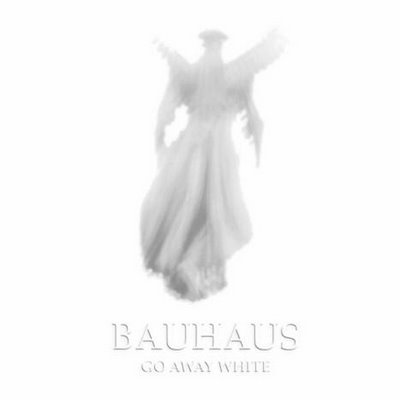
They’ve reformed several times since, the most recent reformation resulting in the new studio album Go Away White (Bauhaus Music, 2008). 

This project unfortunately seems to have ended badly with no supporting tour and vows to never work together again following what is now referred to only as “the incident”, details of which the band seem exceedingly coy to reveal.

Track listing:
  1. Double Dare
  2. In the Flat Field
  3. A God in an Alcove
  4. Dive
  5. The Spy in the Cab
  6. Small Talk Stinks
  7. St. Vitus Dance
  8. Stigmata Martyr
  9. Nerves
In the Flat Field has since been re-released an astonishing number of times by many companies around the world, the CD versions generally featuring numerous bonus tracks.


Line up: Peter Murphy (vocals), Daniel Ash (guitar), David J. Haskins (bass), Kevin Haskins (drums).


What’s that?
You wanted Bela Lugosi’s Dead?
Sorry, not on the album.
Then again, I guess not including it would be a bit like reviewing Led Zeppelin without talking about Stairway to Heaven, so by way of compromise, here it is, all 9+ glorious minutes of it - Goth's very own Stairway to Heaven.